
Riccitelli Milano develops and manufactures outerwear in Italy for fashion brands: wool and cashmere coats, trench coats, parkas, capes, quilted and down pieces, and technical outerwear. Outerwear is the hardest garment category to produce well, and it is the one that decides how a collection is judged, because a coat is what a customer sees first and keeps longest.
We are a fashion production agency in Milan. A brand hires us and we produce the collection, answering for the result at every stage, from the first pattern through to the packed order.
Why outerwear is the hardest thing to produce
A dress hangs from the shoulder and falls. A coat has to hold a shape while carrying weight, over other clothes, in movement, for years. Everything that makes that possible is invisible from the outside, which is why outerwear separates competent producers from serious ones.
Weight and balance. A wool coat can weigh several times what a jacket weighs. That mass pulls on the shoulder and the back, and if the pattern does not account for it the garment collapses forward after a week of wear.
Internal structure. Canvas, interlinings, shoulder construction, chest pieces and taping decide whether the coat keeps its line. These choices are made before the first sample, not corrected afterwards.
Layering. Outerwear is worn over a jacket, over a knit, over a shirt. The block has to allow for that without reading as oversized when worn alone. Getting this wrong is the single most common fault in outerwear from producers who normally make lighter garments.
Bulk at the seams. Heavy cloth multiplies at every joint. Collars, revers, armholes and hems all need construction decisions that reduce bulk without weakening the seam.
What we produce
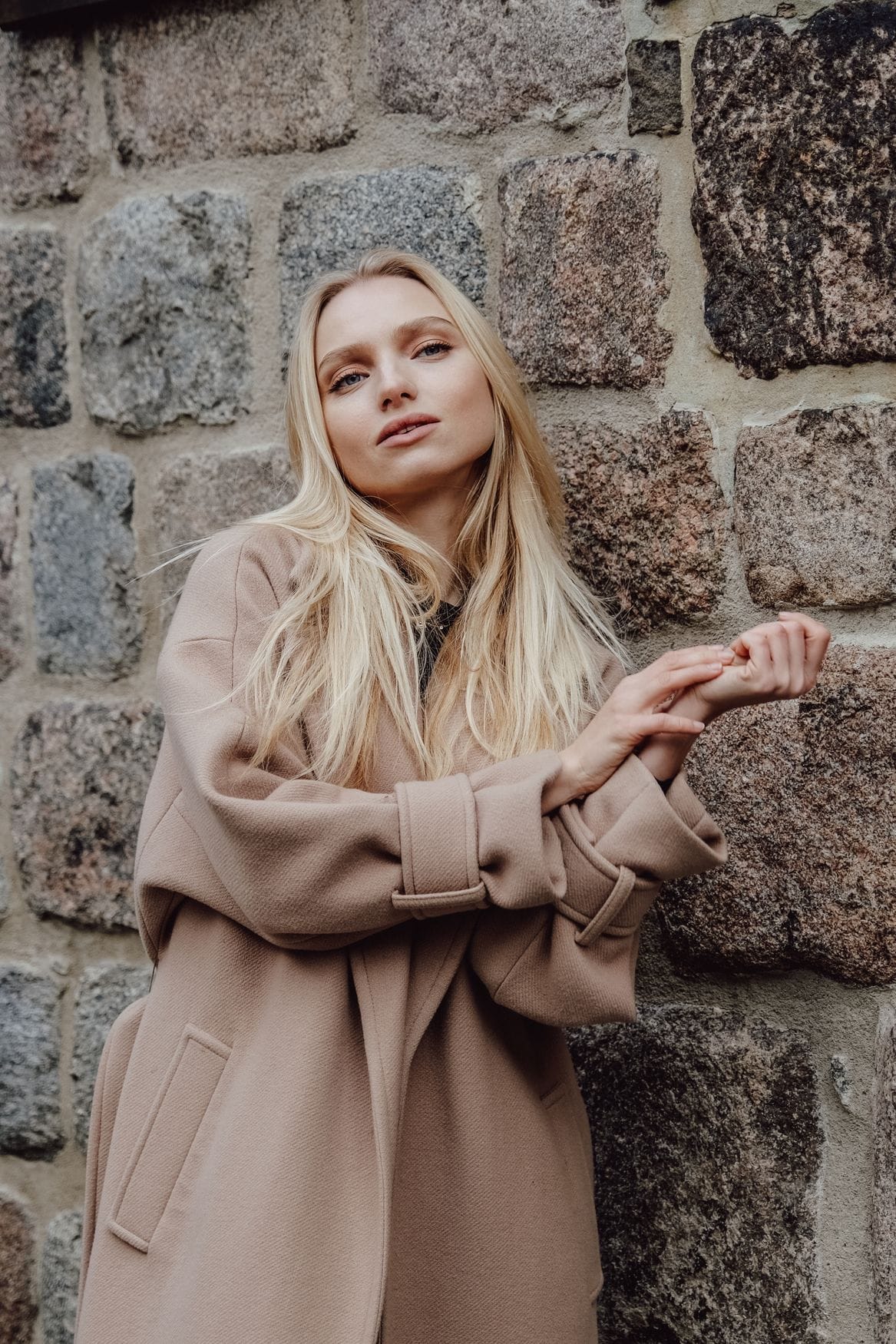
Wool and cashmere coats, from the classic camel wrap to the architectural and oversized. Tailored coats with full canvas construction, made in the tailoring rooms that also build our suits and jackets. Trench coats in cotton gabardine and technical cloth, with their yokes, storm flaps and hardware. Parkas and field jackets. Capes and unstructured wrap coats. Quilted and down pieces, where the challenge moves to fill power, channel construction and stitching that holds warmth without looking padded. Technical and hybrid outerwear that combines performance cloth with tailoring finishes.
Leather and shearling outerwear runs through our specialist ateliers: see leather outerwear and jackets production.
The cloth, and why it decides everything
Outerwear cloth has to do three things at once: hold a shape, resist wear, and feel worth the price. We buy from the Italian houses that supply the best tailoring rooms in the world, and we choose against how the coat has to behave rather than from a swatch book.
Double faced wool and cashmere allow a coat with no lining and no visible seams, joined by hand, which is among the most demanding things a coat maker can do. Melton and loden give density and weather resistance. Cotton gabardine gives the trench its structure and its drape. Technical laminates need seam sealing and a different construction logic entirely.
Consumption is measured on the real pattern rather than estimated, because outerwear eats cloth and an error of a few centimetres per garment becomes a serious number across a run. See our fabric sourcing service in Italy.
How an outerwear project runs
Technical development. Flats drawn to scale with every seam, closure and proportion. First patterns drafted by hand or in CAD, cut and hung, then graded across the full size range so the fit holds from the smallest size to the largest. Everything lands in a tech pack carrying materials, trims, the measurement chart and the construction.
Sampling and fit. The first prototype is built and worn, not just looked at, because outerwear only reveals its faults in movement and over layers. Corrections go back into the pattern, a second sample confirms them, and the size set proves the grading. See sampling and prototyping.
Production. Cutting, making in the workshop built for that construction, quality control against the approved sample at every stage, then pressing, labelling, packing and delivery.
Calendars: outerwear starts first
Outerwear should be the first category into development and the last you compromise on. Cloth for coats is woven in fewer runs and books out earlier than lighter fabrics, structured pieces need more fitting rounds, and the making itself is slower per garment.
In practice, if a coat has to be in store for autumn, development belongs at the start of the previous cycle rather than alongside the rest of the range. We build the calendar backwards from your delivery date and place cloth bookings first.
Quantities
Minimums are set against what each garment actually requires rather than a single number applied to everything. A structured tailored coat and an unlined wrap coat carry completely different constraints, so we quote each against its real needs and place it where a run of that size makes sense. See low minimum order production and capsule collection production.
Frequently Asked Questions
What makes outerwear harder to manufacture than other garments?
Weight, structure and layering. A coat has to hold its shape while carrying real mass over other clothes and in movement. The canvas, interlinings, shoulder construction and taping that make that possible are invisible from the outside and are decided before the first sample, so a producer who normally makes lighter garments tends to get them wrong.
Which fabrics are used for luxury coats?
Double faced wool and cashmere for unlined coats joined by hand, melton and loden for density and weather resistance, cotton gabardine for trench coats, and technical laminates where performance matters. The choice follows what the coat has to do rather than how the cloth looks on a swatch card.
What is a double faced coat?
A coat made from cloth woven with two finished faces, so it needs no lining. The seams are split and joined by hand, which leaves no visible stitching and produces a garment that is light for its warmth and finished identically inside and out. It is among the most demanding constructions in outerwear and one of the clearest markers of a serious maker.
How long does outerwear production take?
Longer than the rest of a collection. Coat cloth books out earlier, structured pieces need more fitting rounds and the making is slower per garment. Outerwear should be the first category into development, and for an autumn delivery that means starting at the beginning of the previous cycle rather than alongside the other categories.
Do you make quilted and down outerwear?
Yes. The challenge there is different: fill power, channel construction and stitching that holds warmth in place without the garment reading as padded. It is a separate skill from tailored coat making and it runs in workshops built for it.
Can you produce outerwear in small quantities?
Yes. Minimums are set per product rather than per client, and a coat is placed in a workshop suited to the run and the construction. Tell us the styles and quantities and we tell you what is possible before you commit.
Do you produce leather and shearling outerwear?
Yes, through our specialist leather ateliers, which is a different supply chain from wool outerwear. Those pieces are covered on our leather outerwear and jackets page.
Produce your outerwear in Italy
Send a sketch, a reference, a cloth or a finished tech pack, and we tell you what it takes to build it: which workshop, which construction, what calendar. Contact our Milan studio, or see the full range of fashion production services.
Leave your details and continue to the project form. Your answers are saved as you type, so you can stop and come back to it.