
Riccitelli Milano develops and manufactures bridalwear in Italy for fashion brands and bridal labels: gowns, separates, civil ceremony dresses, veils and the accessories that complete them. Bridal is the highest stakes garment in fashion. It is worn once, photographed permanently, and there is no second chance if the fit is wrong on the day.
We are a fashion production agency in Milan working with the ateliers that build couture. A brand hires us and we produce the collection, answering for the result at every stage.
What bridal demands that other categories do not
Internal architecture. A bridal gown stands on a structure nobody sees: a boned inner corselet, grosgrain waist stay, cups and support that carry the dress independently of the outer fabric. Done properly the wearer forgets she is wearing it. Done badly she spends the day adjusting it.
Weight management. A full skirt in tulle and lace with a train can weigh several kilos, all of it hanging from the bodice. Where that weight is transferred, and how, is a construction decision taken at the first pattern.
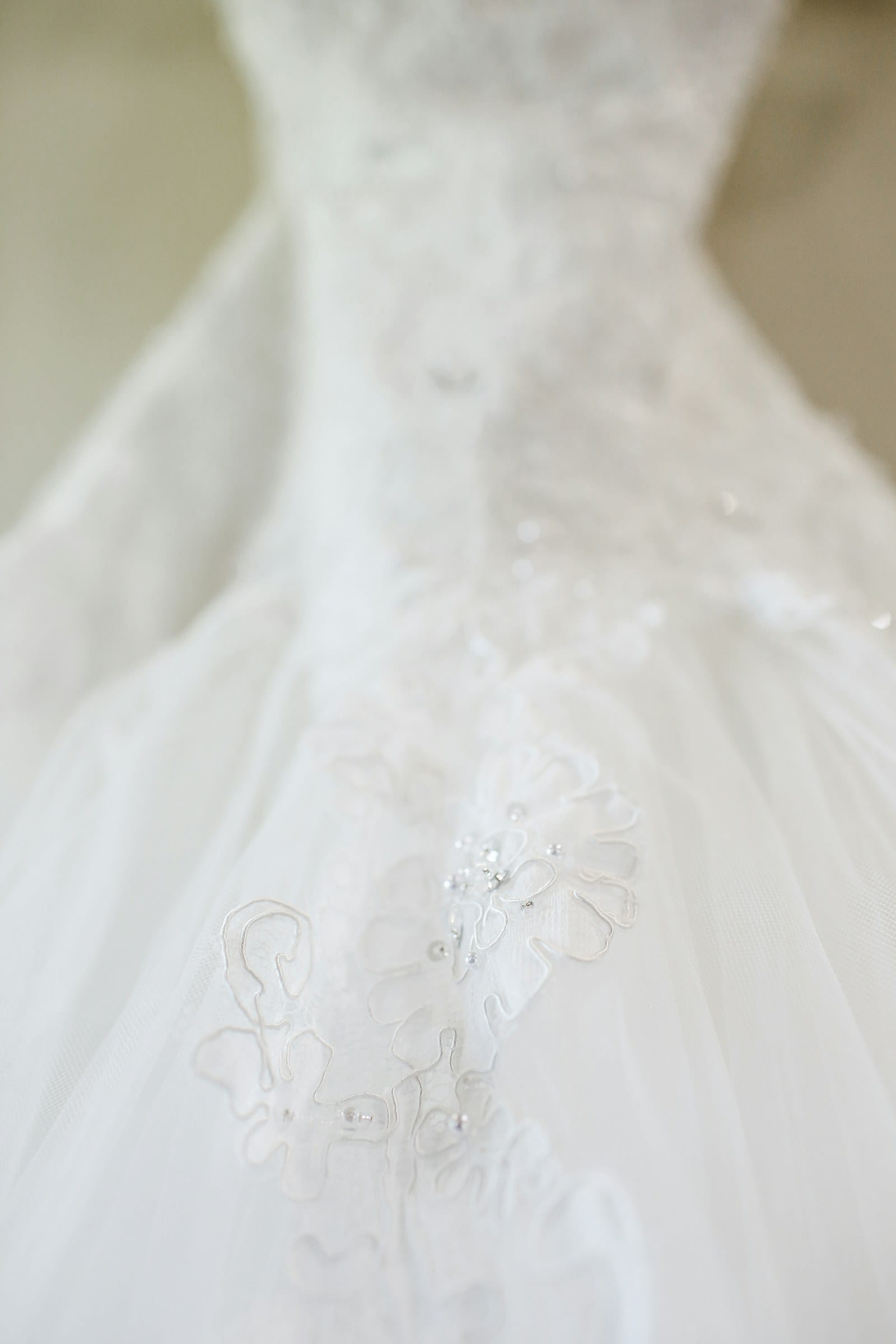
White is unforgiving. Every shadow, every seam allowance, every stitch shows through white and ivory fabrics. Seam finishing that would be invisible in navy has to be planned in bridal, and the colour matching across lace, tulle, satin and thread has to be exact, because three slightly different ivories read as a mistake.
Hand work cannot be compressed. Appliqué, beading and hand finishing take the time they take. A calendar that assumes otherwise fails.
What we produce
Full gowns in every silhouette, from column and sheath to ballgown and A line. Bridal separates: corsetry, skirts, overskirts and tops. Civil ceremony and registry dresses, shorter and less formal but built to the same standard. Veils, capes and boleros. Beaded and embroidered pieces through our embroidery specialists. Bridesmaid and mother of the bride ranges alongside the main collection.
Non bridal occasion pieces run through occasionwear and eveningwear and couture.
Fabric
Silk mikado for structure and a matt finish, duchesse satin for weight and shine, crepe for a clean column, organza and tulle for volume, and lace from the mills that supply couture. The critical work is matching: lace, tulle, lining, thread and buttons all have to sit in the same tone, and that is decided against physical samples under the same light rather than against a colour code. See fabric sourcing in Italy.
How a bridal project runs
Flats and construction drawn, then the first pattern drafted flat or draped on the stand, because most bridal silhouettes can only be resolved in three dimensions. A calico toile is made and fitted before any silk is cut, which is not optional in bridal: cutting an expensive cloth against an unproven pattern is how a collection loses its margin. Corrections go into the pattern, the sample is made in the real fabric, the size set proves the grading, and the approved sample becomes the production reference. See pattern making and sampling and prototyping.
Calendars
Bridal runs on a long cycle. Collections are shown to buyers roughly a year before they reach brides, and hand worked pieces need months rather than weeks. We build the calendar backwards from your selling season and place the embellished styles first, because they set the critical path.
Quantities
Bridal is naturally a low volume category, which suits how we work. Minimums are set per style against the construction. See low minimum order production and made to order production.
Frequently Asked Questions
What holds a bridal gown up?
An internal structure, not the outer fabric: a boned corselet, a grosgrain waist stay and built in support that carry the dress independently. It is invisible and it is the whole product, because a gown that has to be adjusted during the day has failed regardless of how it looks in photographs.
Why make a toile before cutting the real fabric?
Because bridal cloth is expensive and mistakes in it are unrecoverable. A calico toile proves the pattern, the balance and the internal structure first. Cutting silk against an unproven pattern is the fastest way to lose the margin on a collection.
How do you match ivory across different fabrics?
Against physical samples under the same light, never against a colour code. Lace, tulle, satin, lining and thread all take dye differently, and three slightly different ivories in one gown read as an error rather than as a choice.
How long does a bridal collection take?
Longer than any other category. Collections are shown to buyers around a year before they reach brides, and hand worked pieces need months. The embellished styles set the critical path, so they go into development first.
Do you produce bridal separates and civil ceremony dresses?
Yes. Separates, shorter registry dresses, capes and boleros are a growing part of the market and are built to the same standard as a full gown, with the same internal construction where the silhouette needs it.
Can you produce small bridal collections?
Yes. Bridal is naturally low volume, which is how we are set up to work. Minimums are set per style against the construction rather than applied across the range.
Do you handle beading and appliqué?
Yes, through the Italian specialists who do this work for couture houses. It is developed on the sample and then repeated to that reference across the production, and the time it takes cannot be compressed.
Produce your bridal collection in Italy
Send a sketch, a reference or a finished tech pack and we tell you what it takes to build it. Contact our Milan studio, or see all fashion production services.
Leave your details and continue to the project form. Your answers are saved as you type, so you can stop and come back to it.