
Riccitelli Milano manufactures loungewear and sleepwear in Italy for fashion brands: cashmere and knitted sets, silk pyjamas, robes, jersey separates and the elevated pieces that now leave the house as often as they stay in it. Loungewear stopped being nightwear years ago, and the brands that still produce it as nightwear are the ones losing the category.
We are a fashion production agency in Milan. A brand hires us and we produce the collection, answering for the result at every stage.
Loungewear is judged by touch first
Almost no other category is bought this way. A customer picks up a loungewear piece and decides in about two seconds, before looking at the cut, the colour or the price. That decision is made entirely by the hand of the cloth.
Which means the fabric budget cannot be the place a brand economises. A beautifully cut lounge set in a mediocre cloth fails on the rail; a simple set in an exceptional cloth sells. Everything else in the category follows from accepting that.
What comfort actually requires
Seams that cannot be felt. A garment worn against the skin for hours, and often slept in, exposes every seam. Flatlock and covered seams, French seams in silk, and bindings rather than raw overlocked edges are what separate a lounge piece a customer keeps from one they stop reaching for.
Elastics that do not bite. The waistband is where lounge trousers fail. Elastic applied under too much tension leaves a mark, elastic that is too soft rolls over. A covered or encased waistband, often with a drawcord, is the answer, and it is a construction decision rather than a trim choice.
Behaviour after washing. Loungewear is laundered more often than any garment in a wardrobe except underwear. A set that pills after six washes or loses its shape at the cuff has failed, regardless of how it felt in the shop. This is why we judge lounge samples washed.
What we produce
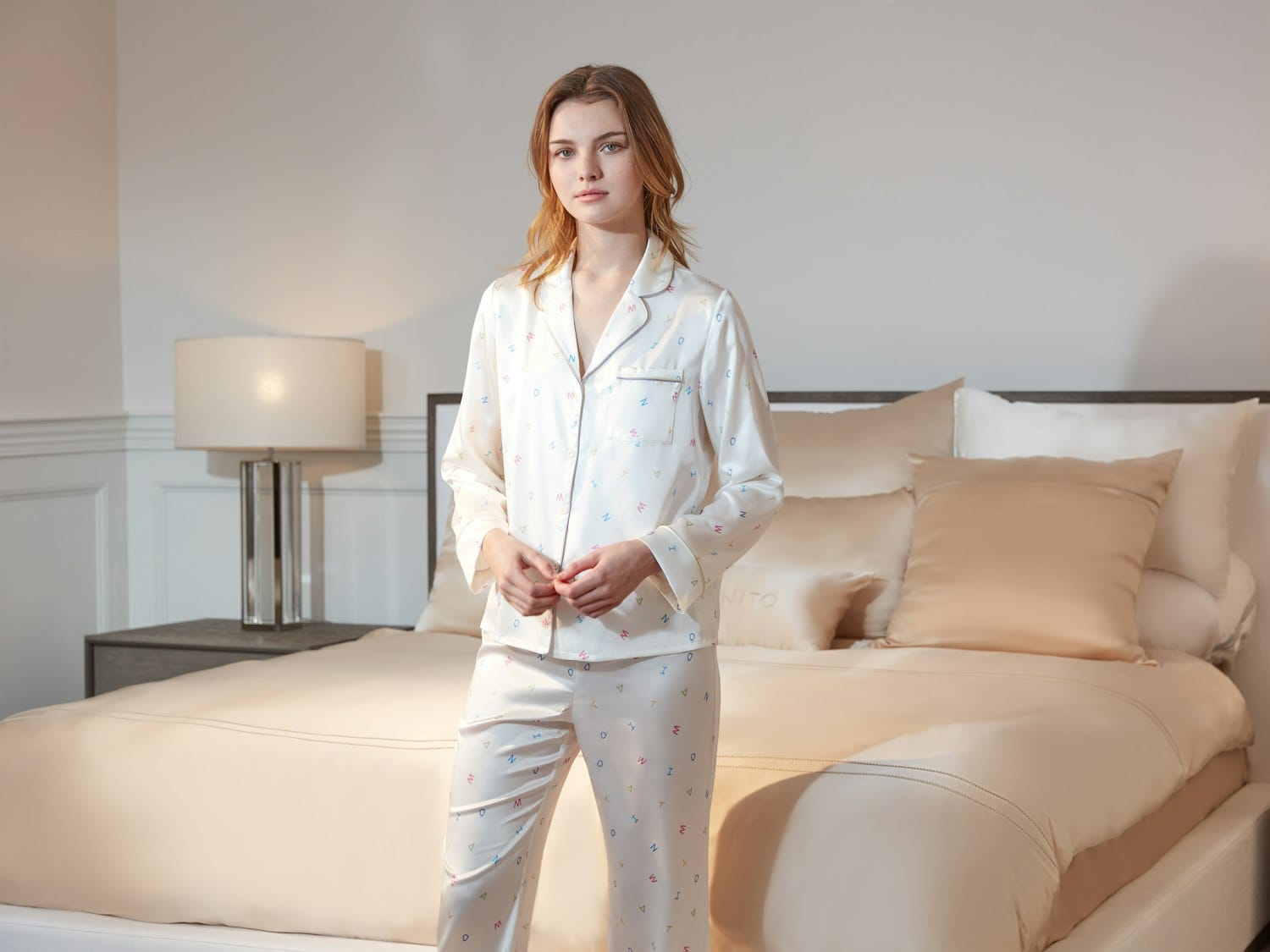
Cashmere and wool lounge sets, knitted through our knitwear specialists. Silk pyjamas and slips, with piping, contrast trims and hand finished edges. Robes and kimonos in silk, cotton and towelling. Jersey and cotton separates, joggers, sweats and tees, produced alongside jersey and t-shirt production. Modal and viscose sets for drape. Loungewear that crosses over into athleisure and resortwear.
Cloth
Silk is specified in momme, the weight unit that decides whether a pyjama drapes or clings: too light and it is transparent and fragile, too heavy and it loses its movement. Cashmere is judged on fibre length and gauge rather than on the word itself, because short fibre cashmere pills within weeks and is the single most common disappointment in the category. Cotton and modal are chosen for hand and for how they behave after repeated laundering.
Colour fastness to washing and pilling resistance are tested before booking rather than discovered afterwards. See fabric sourcing in Italy.
How a loungewear project runs
Flats drawn with seam types, binding and elastic construction specified, because in this category those are the product. Patterns drafted with real ease, since loungewear that fits like ready to wear is not loungewear. Samples made, washed and then judged, and worn overnight if the piece is sleepwear. Corrections into the pattern, size set proven, approved sample as the production reference. See pattern making and sampling.
Quantities
Minimums follow the fabric, since knits and silks are dyed in lots. See low minimum order production and capsule collections.
Frequently Asked Questions
What makes loungewear feel expensive?
The hand of the cloth, decided in about two seconds when a customer picks the piece up, and then the seams. Flatlock or covered seams, French seams in silk and bound edges rather than raw overlocking are what a wearer notices over hours against the skin.
What is momme in silk?
The weight unit for silk, and the number that decides how a pyjama behaves. Too light and the garment is transparent and fragile, too heavy and it loses the movement that makes silk worth using. It should be specified in the tech pack, not left to the supplier.
Why does cashmere loungewear pill?
Because of short fibre cashmere. The word on the label says nothing on its own: fibre length and gauge decide whether a set still looks good after a season or pills within weeks. It is the most common disappointment in the category and it is avoidable at sourcing.
Do you judge loungewear samples washed?
Yes. Loungewear is laundered more than almost anything else in a wardrobe, so a sample approved fresh is not the garment the customer lives with. We look at it after washing, and overnight if it is sleepwear.
How should a lounge waistband be built?
Covered or encased, usually with a drawcord. Elastic applied under too much tension leaves a mark on the skin and elastic that is too soft rolls over. It is a construction decision taken on the pattern rather than a trim chosen at the end.
Can loungewear be worn outside the house?
That is now most of the market. The pieces that cross over are cut with a cleaner line, finished as carefully as ready to wear and made in cloth that photographs well, which is a different specification from traditional nightwear.
Can you produce a small loungewear range?
Yes, though the minimum follows the fabric because knits and silks are dyed in lots. A focused set in one or two colourways is a realistic launch.
Produce your loungewear in Italy
Send a reference garment, a fabric or a finished tech pack and we tell you what it takes to build it. Contact our Milan studio, or see all fashion production services.
Leave your details and continue to the project form. Your answers are saved as you type, so you can stop and come back to it.