
Riccitelli Milano manufactures fashion accessories in Italy for brands: belts, gloves, small leather goods, hats, scarves, knitted accessories and the hardware and packaging that finish them. Accessories are the highest margin part of most collections and the fastest way for a brand to extend its range, and they run on supply chains that have nothing to do with garment production.
We are a fashion production agency in Milan and we hold those relationships so a brand does not have to build them. A brand hires us and we produce, answering for the result at every stage.
Accessories are a different supply chain
A garment factory cannot make a belt. Leather goods run on hides, hardware, moulds and hand skills that live in specific Italian districts: Tuscany for leather, Naples for gloves, Como for silk, the Marche for footwear. Each has its own lead times, its own minimums and its own way of quoting.
That is why brands that extend into accessories usually discover the calendar too late. Hardware in particular is the trap: custom buckles, clasps and zip pulls need tooling, and tooling needs weeks before a single sample exists.
What we produce
Belts in vegetable tanned and chrome tanned leather, with custom or stock hardware. Gloves in nappa, suede and peccary, hand cut and lined. Small leather goods: card holders, wallets, pouches, key cases and tech accessories. Hats, caps and millinery. Silk scarves and foulards printed and hand rolled in Como. Knitted accessories: scarves, beanies, gloves and wraps in cashmere and wool. Labels, tags, dust bags and packaging.
Bags and larger leather goods run through leather goods and bags production.
Leather, and why the hide decides the price
Leather is sold by the hide and every hide has natural marks. A belt cut from the back of the hide behaves differently from one cut from the belly, and a maker who cuts wherever it is convenient produces a run that stretches unevenly. Yield is the real cost driver in leather goods, not the price per square foot, and it is decided by how the pattern is placed.
Vegetable tanned leather from Tuscany develops a patina and is what a customer expects from Made in Italy. Chrome tanned is softer and more consistent. The choice follows the product, and both are tested for colour fastness and rub before booking.
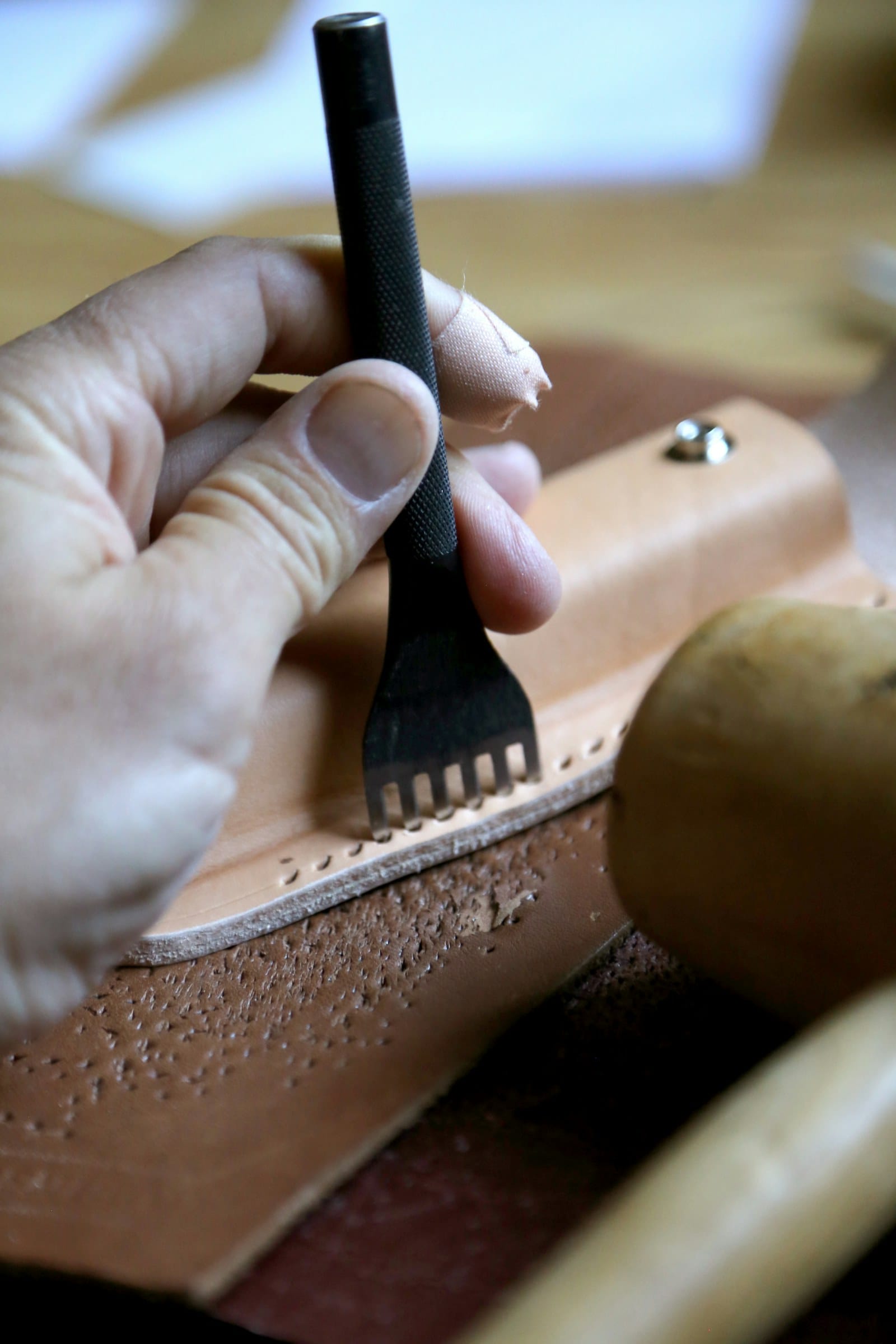
Hardware and tooling
Custom hardware is what makes an accessory recognisably yours, and it is also the longest lead time in the project. Buckles, clasps, zip pulls and engraved plates need tooling, plating decisions and minimum runs of their own. We start hardware first, in parallel with design, so it never becomes the reason a delivery slips.
How an accessories project runs
Technical drawings with dimensions, materials and hardware specified. Tooling started early. Prototypes made in the real material, because leather cannot be simulated in a substitute. Corrections, a confirmed sample, then production with quality control against that sample, followed by finishing and packaging. See quality control and compliance.
Quantities
Minimums vary more in accessories than anywhere else, because hardware and tooling carry their own thresholds. See low minimum order production.
Frequently Asked Questions
Can a garment manufacturer also make accessories?
No. Accessories run on hides, hardware, moulds and hand skills that live in different Italian districts from garment production, with their own lead times and minimums. Extending into accessories means building a second supply chain, or working with someone who already holds it.
What is the longest lead time in an accessories project?
Custom hardware. Buckles, clasps and engraved plates need tooling, plating decisions and their own minimum runs, all before a first sample exists. Hardware should start in parallel with design rather than after it.
Why does where the leather is cut matter?
Because a hide is not uniform. Leather from the back behaves differently from the belly, so belts cut wherever it is convenient will stretch unevenly across a run. Yield and placement, not the price per square foot, are what actually drive cost and consistency.
Vegetable tanned or chrome tanned?
Vegetable tanned develops a patina and is what customers associate with Made in Italy, but it is less uniform and marks more easily. Chrome tanned is softer and more consistent. The product decides, and both are tested for colour fastness and rub resistance before booking.
Do you produce silk scarves?
Yes, printed and hand rolled in Como, where the best silk printers in the world work. That is covered in more detail on our silk scarves and foulards page.
Can you make branded packaging and dust bags?
Yes, alongside the product rather than as an afterthought, so the box, the dust bag, the tags and the labels arrive with the goods rather than weeks later.
Can you produce accessories in small quantities?
Yes, though minimums vary more here than in any other category because hardware and tooling carry thresholds of their own. Tell us the product and the quantity and we tell you what is realistic.
Produce your accessories in Italy
Send a drawing, a reference or a finished specification and we tell you what it takes to build it. Contact our Milan studio, or see all fashion production services.
Leave your details and continue to the project form. Your answers are saved as you type, so you can stop and come back to it.