
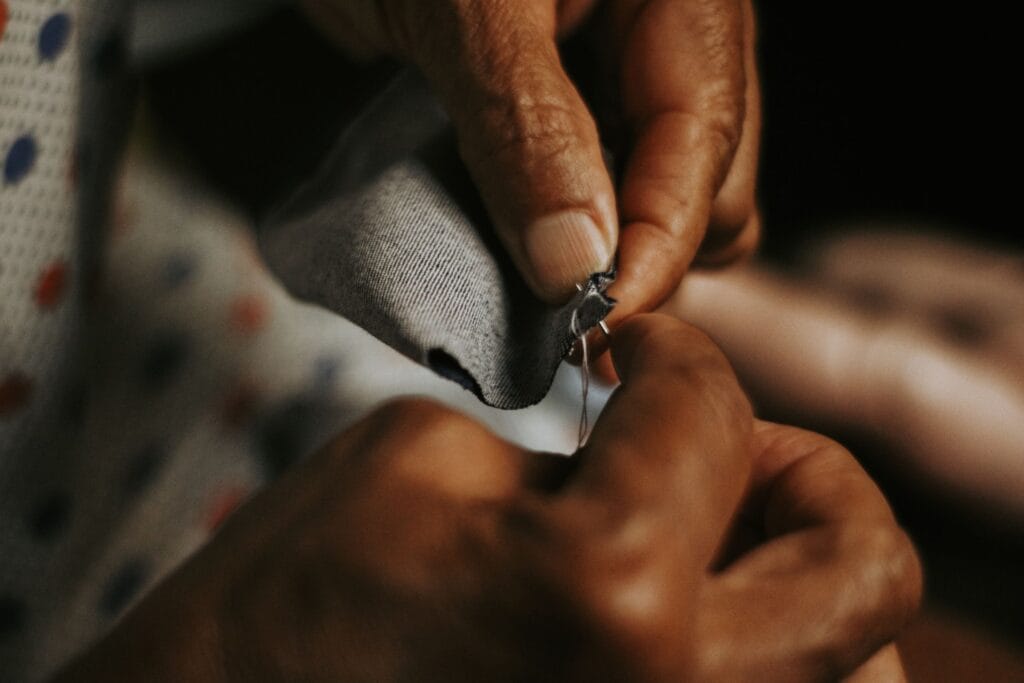
Sustainability has become one of the defining concerns of contemporary fashion, and rightly so. Yet behind the conversation lies a simple truth that the industry has sometimes forgotten, that the most sustainable garment is one made well enough to last. Italian production, with its deep roots in craftsmanship and quality, is uniquely placed to answer this challenge.
For brands that want to align their values with their making, understanding how responsible production works in Italy is an essential first step. It is not about slogans but about decisions made at every stage of a garment’s creation.
Longevity as the First Principle
A garment that lasts for years, worn and loved rather than discarded, represents the most meaningful form of sustainability. This is where quality and responsibility meet. Durable construction, sound materials and timeless design all extend the life of a piece, reducing the need for replacement.
Italian production has always prized this kind of longevity. The same attention to construction that defines luxury also makes garments more enduring, proving that quality and sustainability are natural partners rather than competing goals.
Responsible Materials
The choice of material shapes a garment’s impact more than almost any other decision. Natural fibres, responsibly sourced wools and silks, and fabrics produced with care for water and energy all contribute to a more thoughtful result. Many Italian mills have invested heavily in these areas, developing materials that are both beautiful and more responsible.
Selecting such materials requires knowledge and access, which is where an experienced production partner becomes valuable. The right guidance turns good intentions into concrete, considered choices.
A Supply Chain Built on Proximity
One of Italy’s quiet sustainable advantages is the proximity of its supply chain. Mills, artisans and workshops often sit within a short distance of one another, reducing the distances materials and garments must travel. This concentration of expertise also means less waste, as problems are caught and corrected quickly.
This local ecosystem, reflected in the country’s manufacturing standards, allows for a more transparent and accountable way of producing, where each stage can be understood and verified.
Reducing Waste Through Precision
Waste in fashion often begins in production, through inefficient cutting, errors and overproduction. Careful pattern work, precise cutting and rigorous sampling all reduce this waste by ensuring that what is made is made correctly the first time.
Producing thoughtfully, in considered quantities and to a high standard, is itself a form of responsibility. It stands in contrast to the wasteful logic of mass production and aligns naturally with the values of luxury.
Responsibility Without Compromise
The most encouraging truth about sustainable production in Italy is that it asks for no compromise on beauty or quality. Responsible choices and exceptional results go hand in hand, allowing a brand to honour both its values and its standards.
For any label seeking to produce more thoughtfully, Italy offers a model where craftsmanship, durability and responsibility reinforce one another, as part of a considered approach to production in Italy.
What Makes Production More Sustainable
- Garments built to last through quality construction.
- Responsibly sourced, durable natural materials.
- A local supply chain that reduces distance and waste.
- Precision in cutting and sampling to avoid errors.
A Choice That Reflects a Brand’s Values
Choosing to produce responsibly is, in the end, a reflection of what a brand believes. It signals to customers that quality and care extend beyond the surface of a garment to the way it is made and the materials it is made from. This authenticity resonates deeply with a generation of buyers who look closely at how the things they own come into being.
Producing thoughtfully in Italy allows a brand to express these values without compromising on beauty. The garments remain luxurious, the craftsmanship remains exceptional, and the story behind them becomes one a brand can tell with genuine pride. In this way, responsibility and luxury reinforce one another, creating products that feel as good to own as they are to wear, and building the kind of trust that endures across seasons.
Frequently Asked Questions
Is sustainable production at odds with luxury?
Not at all. The most sustainable garment is one made well enough to last, and longevity is precisely what luxury has always valued. Durable construction, fine materials and timeless design extend a garment’s life and reduce the need for replacement. In this sense, the careful craftsmanship that defines luxury production also makes it more responsible, so quality and sustainability work together rather than against each other.
How does producing in Italy support sustainability?
Italy’s production ecosystem offers several advantages. Mills, artisans and workshops are often located close together, reducing the distances materials and garments travel and making the supply chain more transparent. Many Italian mills have invested in responsible materials and processes, and the culture of precision in cutting and sampling helps reduce waste. Combined with a tradition of building garments to last, this makes Italian production well suited to a more responsible approach.
Let’s create your collection together
If you would like to develop or produce a collection with the craftsmanship of Made in Italy, tell us about your project using the form below and our team will get back to you to start your production.
Leave your details and continue to the project form. Your answers are saved as you type, so you can stop and come back to it.