
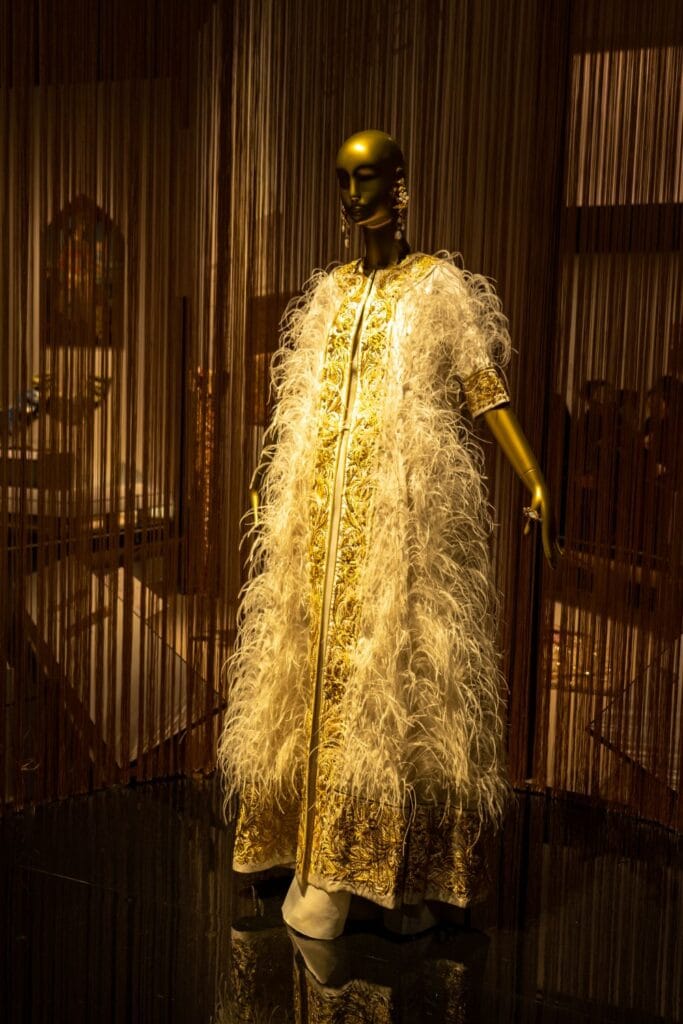
Of all the elements of a garment, few are as visible or as influential as the neckline. Framing the face, it draws the eye and sets the tone of the entire piece. Whether finished as a simple neckline or a structured collar, this area carries enormous design weight and demands careful construction.
Understanding necklines and collars reveals how such a small area can shape the character of a whole garment.
The Power of the Neckline
The neckline is one of the first things the eye notices, and its shape profoundly affects how a garment reads. A high neckline conveys formality and restraint, while a lower or wider one can feel open and relaxed. The neckline also relates closely to the face and shoulders, influencing how flattering a garment is.
Because of this prominence, the neckline is a key expressive tool, closely tied to the study of proportion and silhouette.
Necklines Without Collars
Many garments feature a finished neckline without a collar, and finishing this edge cleanly is a skilled task. Facings, bindings and other techniques are used to give the neckline a neat, stable edge that holds its shape. The choice of finish depends on the fabric and the design.
A well-finished neckline lies flat and clean, a quiet but important sign of quality construction.

The Craft of the Collar
A collar adds structure and detail to the neckline, and it is one of the more demanding elements to construct. Whether a soft, rolled collar or a crisp, structured one, it must be shaped, interfaced and pressed so that it sits beautifully. The craft of the collar is central to garments from shirts to coats, as explored in our look at shirting.
The way a collar rolls and sits is a clear indicator of construction quality, achieved through careful work and skilled pressing.
Interfacing and Support
Both necklines and collars often rely on interfacing to provide structure and stability. The right support keeps a collar crisp and a neckline stable, while the wrong choice can stiffen or distort the area. Selecting and applying this support correctly is essential, connecting to the craft of internal support.
This hidden structure is part of what allows the neckline and collar to hold their intended shape over time.
Framing With Intention
The neckline and collar are where a garment meets the face, making them among the most important areas to resolve well. A beautifully designed and constructed neckline frames the wearer and elevates the entire garment.
Achieving this requires both design sensitivity and construction skill, the combination that defines thoughtful production in Italy.
What Defines a Refined Neckline
- A shape that flatters the face and shoulders.
- A clean, stable edge finish where there is no collar.
- A collar that is well shaped, interfaced and pressed.
- Appropriate internal support for lasting shape.
Where Design and Construction Meet
The neckline and collar are a perfect illustration of how design and construction must work together. A beautiful neckline that is poorly constructed will not sit correctly, while flawless construction cannot rescue a poorly judged shape. Only when vision and craft align does this crucial area truly succeed.
This is why the finest garments treat the neckline as a priority rather than an afterthought. The shape is designed with care for how it frames the wearer, and the construction is executed with the precision the area demands. The result is a neckline that draws the eye for all the right reasons, elevating the whole garment and reflecting the standard of thoughtful making.
Frequently Asked Questions
Why is the neckline so important in a garment?
The neckline frames the face and is one of the first things the eye notices, so it strongly influences how a garment reads. Its shape conveys mood, from the formality of a high neckline to the openness of a lower one, and it relates closely to the face and shoulders, affecting how flattering a garment is. Because of this prominence, the neckline is a key expressive tool and an area that deserves careful design and construction.
What makes a collar difficult to construct?
A collar must be shaped, interfaced and pressed so that it sits beautifully and rolls naturally, which requires real skill. Whether soft or structured, it relies on the right interfacing for support and on careful pressing to set its shape. The way a collar rolls and sits is immediately visible and is a clear indicator of construction quality. This combination of shaping, support and pressing makes the collar one of the more demanding elements to construct well.
Let’s create your collection together
If you would like to develop or produce a collection with the craftsmanship of Made in Italy, tell us about your project using the form below and our team will get back to you to start your production.
Leave your details and continue to the project form. Your answers are saved as you type, so you can stop and come back to it.