

The waistcoat is a small garment that demands a great deal of skill. Worn close to the body and often beneath a jacket, it must fit precisely, sit cleanly and reveal refined detail. Far from a simple accessory, a well-made waistcoat is a showcase of tailoring craft. Understanding its making reveals how much precision and structure go into such a compact garment.
It is a piece where the quality of the work is immediately apparent.
A Garment of Precision
Because the waistcoat is close-fitting, precision is essential. There is little room to disguise errors, and the fit must be exact for the garment to sit cleanly. This makes careful pattern work and fitting especially important, as small inaccuracies are immediately visible.
This demand for precision connects the waistcoat to the broader discipline of tailoring, where exactness defines quality.
Structure and Shape
A tailored waistcoat relies on internal structure to hold its shape. Interfacing and careful construction give the front its clean form, while the back is often made differently to allow for adjustment and fit. This combination of structure and shaping is what gives the waistcoat its tailored character.
The internal work, though hidden, is essential to the garment’s appearance, reflecting the craft of internal support.
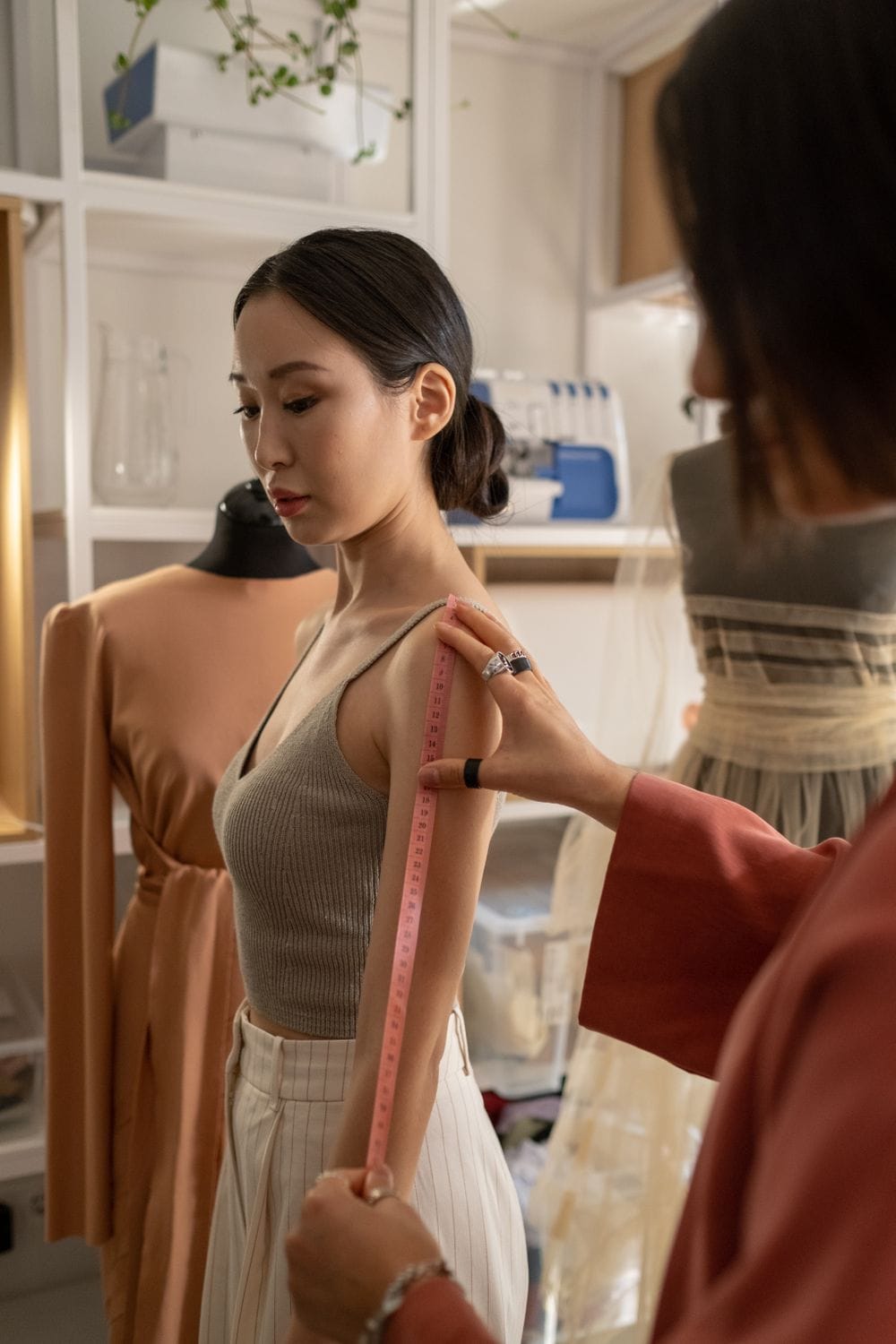
The Front and the Back
A distinctive feature of many waistcoats is the contrast between front and back. The front is typically made in the main fabric with full structure, while the back may be made in a lining fabric, often with an adjustable strap. This construction balances structure with comfort and fit.
Executing this contrast cleanly requires skill, as the two halves must work together seamlessly into a refined whole.
Detail and Finishing
The waistcoat is a garment of detail. Pockets, buttons, the shaping of the points and the finishing of the edges all contribute to its quality. Because it is small and worn close to the eye, these details are highly visible and must be executed with care.
This attention to detail, reflecting considered finishing, is what distinguishes a fine waistcoat.
A Test of Tailoring
For all its small size, the waistcoat is a genuine test of tailoring skill. Its close fit, internal structure and visible detail leave no room for shortcuts. A beautifully made waistcoat demonstrates a maker’s command of the tailoring craft.
This is why the waistcoat is held in high regard among those who appreciate fine garment making.
Small Garment, Great Craft
The tailored waistcoat proves that small garments can demand great craft. Its precision, structure and detail require real skill, and a well-made example is a quiet showcase of tailoring at its best.
Producing such a garment to a high standard depends on genuine expertise, the kind that defines production in Italy.
What Makes a Fine Waistcoat
- Precise pattern work and an exact fit.
- Internal structure that holds the front’s shape.
- A clean contrast between front and back.
- Refined detail and finishing throughout.
For a brand, the waistcoat is an opportunity to demonstrate craftsmanship in a single, compact garment. Its demanding nature means that a beautifully made waistcoat speaks clearly of the skill behind it, rewarding the customer with a piece that fits precisely and reveals refined detail at close quarters. Producing such a garment well requires makers with genuine tailoring expertise, and the result is a piece that customers come to treasure. In this way, even a small garment can express a brand’s commitment to quality and the depth of its craft.
It is also worth remembering that the waistcoat has a long and distinguished history in tailoring, valued across generations for the way it combines structure with elegance. To make one well today is to take part in that tradition, applying time-honoured skills to a garment that remains relevant and refined. For the wearer, a finely tailored waistcoat offers a quiet confidence, a piece that fits closely, sits cleanly and rewards close attention, embodying the very essence of considered craftsmanship.
Frequently Asked Questions
Why is a waistcoat difficult to make well?
Although small, the waistcoat is demanding because it is close-fitting and worn near the eye, leaving little room to disguise errors. The fit must be exact for the garment to sit cleanly, requiring careful pattern work and fitting. It also relies on internal structure to hold its shape, and its visible details, from pockets to edges, must be executed with care. These demands make the waistcoat a genuine test of tailoring skill.
Why is the back of a waistcoat often different from the front?
Many waistcoats are constructed with the front in the main fabric, fully structured to hold a clean shape, while the back is made in a lining fabric, often with an adjustable strap. This construction balances structure with comfort and allows the fit to be adjusted. Executing this contrast cleanly requires skill, as the two halves must work together seamlessly into a refined whole that looks and fits beautifully.
Explore our Italian tailored suits manufacturing.
Let’s create your collection together
If you would like to develop or produce a collection with the craftsmanship of Made in Italy, tell us about your project using the form below and our team will get back to you to start your production.
Leave your details and continue to the project form. Your answers are saved as you type, so you can stop and come back to it.