
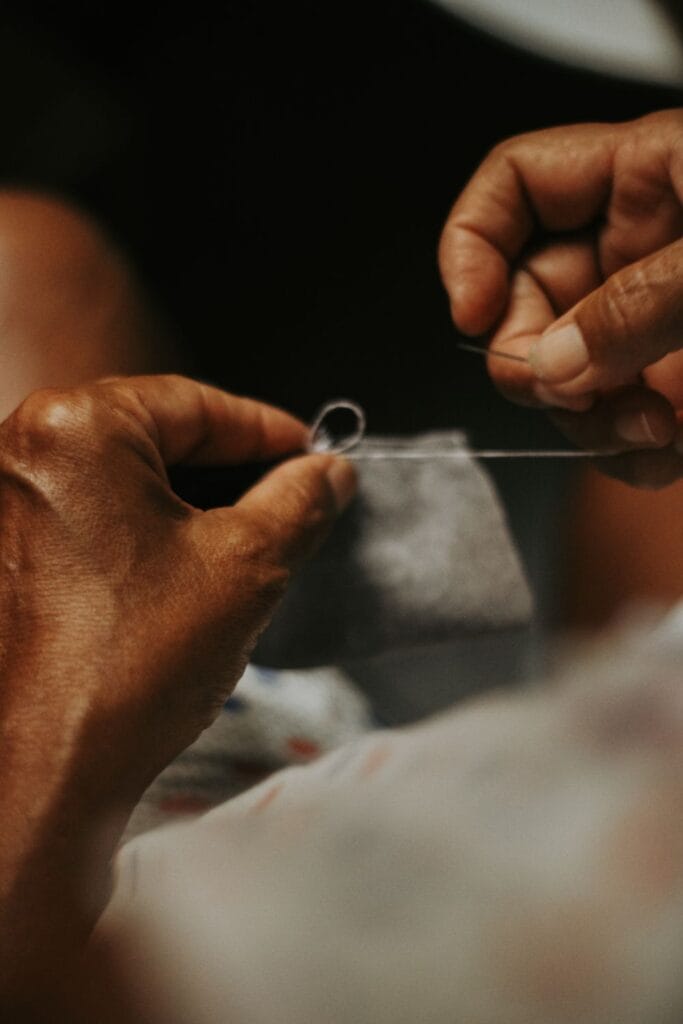
Within the world of garment making lie two great crafts that are often confused, dressmaking and tailoring. Though they share a goal, to create beautiful, well-fitting clothes, they rely on different techniques, traditions and ways of thinking. Understanding the distinction reveals much about how garments are made and why certain pieces require particular expertise.
For designers, knowing which craft a garment calls for is an important part of bringing a design successfully to life.
The Craft of Dressmaking
Dressmaking is the art of creating soft garments, particularly dresses, blouses and skirts. It often works with lighter, more fluid fabrics and emphasises drape, movement and the way cloth falls on the body. Techniques such as draping and soft shaping are central to its approach.
The dressmaker’s skill lies in coaxing beauty from fabric, working with its natural behaviour to create garments that flow and flatter. This sensitivity to material connects dressmaking closely to the art of draping.
The Craft of Tailoring
Tailoring, by contrast, is the art of structured garments, above all jackets, coats and suits. It relies on building shape into cloth through internal structure, precise pattern work and skilled pressing. Where dressmaking follows the fabric, tailoring often shapes it deliberately into form.
The tailor works with canvas, interfacings and careful construction to create garments with architecture and presence, a tradition explored in our look at Italian tailoring.

Different Tools and Techniques
The two crafts call for different approaches at almost every stage. Tailoring involves building internal structure, shaping with the iron and constructing garments in layers, while dressmaking focuses on clean seams, fluid drape and the careful handling of soft fabrics.
This is why a maker skilled in one is not automatically expert in the other. Each craft is a deep discipline, developed over years of dedicated practice.
Where the Crafts Meet
Many garments draw on both crafts, and the finest ateliers bring the two together. A structured dress might combine tailored elements with soft draping, requiring an understanding of each tradition. Knowing how and when to combine them is part of advanced garment making.
This versatility is one of the strengths of a well-equipped production house, able to call on the right skills for each design.
Choosing the Right Craft
For a designer, recognising which craft a garment requires is essential to achieving the intended result. A structured jacket demands tailoring expertise, while a fluid gown calls for dressmaking skill, and many pieces benefit from both.
Working with a partner who understands and offers both crafts ensures that every design is made by the right hands, as part of considered production in Italy.
How the Two Crafts Differ
- Dressmaking works with soft, fluid garments and drape.
- Tailoring builds structured garments with internal shape.
- Each relies on distinct tools and techniques.
- The finest pieces often combine both traditions.
Choosing the Right Hands for Each Garment
Ultimately, the distinction between dressmaking and tailoring matters because it determines who should make a given garment. Entrusting a structured jacket to a dressmaker, or a fluid gown to a tailor, risks a result that falls short of its potential. The finest production matches each design to the craft and the makers best suited to it.
This is one of the advantages of working with a well-equipped production house that can call on both traditions. Whether a design calls for the soft artistry of dressmaking, the architectural precision of tailoring or a thoughtful combination of the two, the right hands bring it to life. Understanding these crafts helps a designer collaborate more effectively and ensures every piece is made to the highest standard.
Frequently Asked Questions
What is the difference between dressmaking and tailoring?
Dressmaking is the craft of soft garments such as dresses, blouses and skirts, working with lighter fabrics and emphasising drape and movement. Tailoring is the craft of structured garments such as jackets, coats and suits, building shape into cloth through internal structure and skilled pressing. Where dressmaking follows the natural behaviour of fabric, tailoring deliberately shapes it into form. Both are deep disciplines requiring distinct techniques and years of practice.
Can one garment use both crafts?
Yes. Many garments draw on both dressmaking and tailoring, and the finest ateliers bring the two together. A structured dress, for example, might combine tailored elements with soft draping, requiring an understanding of each tradition. Knowing how and when to combine the crafts is part of advanced garment making, which is why working with a production house that offers both skills is so valuable.
Let’s create your collection together
If you would like to develop or produce a collection with the craftsmanship of Made in Italy, tell us about your project using the form below and our team will get back to you to start your production.
Leave your details and continue to the project form. Your answers are saved as you type, so you can stop and come back to it.