
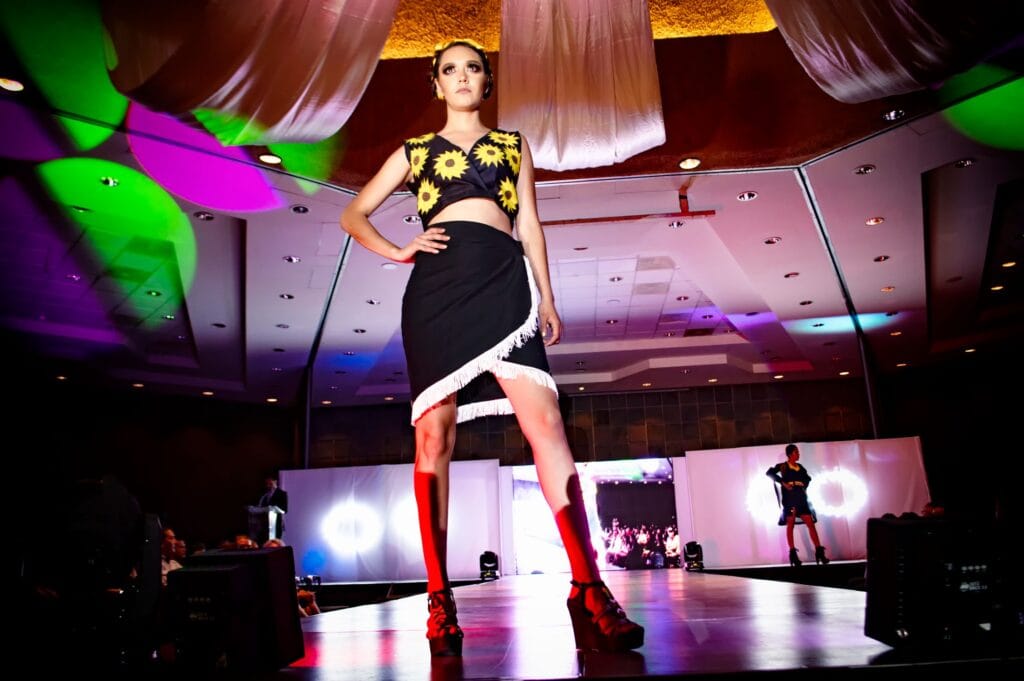
A print can define a garment, giving it personality, energy and instant recognition. Yet a beautiful print on fabric does not automatically make a beautiful garment. The way a pattern is placed, scaled and matched across a piece is what truly determines its success. Print and placement are a design discipline in their own right.
Understanding this craft reveals why some printed garments feel resolved while others feel accidental.
Repeat Prints and Their Logic
Most prints are designed as repeats, patterns that tile seamlessly across a length of fabric. While efficient, repeats must be handled thoughtfully in construction. The scale of the repeat affects how the pattern reads on the body, and large repeats in particular require careful planning so the design falls well across each panel.
Matching the pattern across seams is a mark of quality. When a print flows uninterrupted across a seam, it signals care and craftsmanship that customers notice even subconsciously.
Engineered and Placed Prints
Beyond repeats, prints can be engineered for a specific garment, with the design positioned deliberately rather than tiled. A placed print might center a motif on a bodice or run a border along a hem. This approach treats the print as part of the garment’s architecture, demanding close coordination between design and pattern.
Scale, Color and Fabric
The impact of a print depends on more than its design. Its scale must suit the garment and the wearer, its colors must be achieved faithfully in production, and the base fabric must support it well. These considerations connect print closely to the crafts of fabric selection and color.
A print that looks striking as artwork can lose its effect if scaled poorly or printed on an unsuitable cloth. Testing on the actual fabric is essential to confirm the result.
What Strong Print Work Requires
- Thoughtful placement that suits the garment and the body.
- Pattern matching across seams for a clean result.
- Scale and color judged on the actual fabric.
- Coordination between print design and construction.
Pattern as Identity
A distinctive print can become a signature, instantly associated with a brand and its world. Achieving that impact takes more than a good drawing, it takes the craft of placement and production working together. Realising prints to this standard depends on experienced making, the kind found within considered Italian production.
Print as Storytelling
A print can carry meaning in a way that few other elements of design can. Whether drawn from art, nature, archive or imagination, a pattern tells a story and gives a collection a distinctive voice. For many brands, a signature print becomes a way of expressing identity that customers come to recognise and seek out.
Developing a print is therefore a creative endeavour as much as a technical one. The design must be conceived with the garment in mind, considering how it will translate onto cloth and onto the body. The most successful prints feel inseparable from the pieces they adorn.
Bringing a Print to Life Faithfully
Translating a print from artwork to finished garment requires care at every step. Colors must be reproduced faithfully, the scale must be judged correctly and the printing itself must be executed cleanly on a suitable fabric. Each of these stages offers the chance for a print to be diminished if handled carelessly, or elevated if handled well.
This is why print work benefits so much from experienced production. A skilled partner ensures that the designer’s vision survives the journey to the finished piece, preserving the impact of the original idea within thoughtful Italian production.
Frequently Asked Questions
What is the difference between a repeat print and an engineered print?
A repeat print is designed to tile seamlessly across a length of fabric, making it efficient but requiring careful handling in construction so the pattern falls well and matches across seams. An engineered or placed print is positioned deliberately for a specific garment, with a motif centred on a panel or a border run along a hem. Engineered prints treat the pattern as part of the garment’s architecture and demand close coordination between print design and pattern making.
Why does pattern matching matter on printed garments?
When a print flows uninterrupted across a seam, it signals real care and craftsmanship, even if the viewer does not consciously notice it. Mismatched patterns, by contrast, can make a garment look careless and disrupt the visual flow of the design. Matching across seams requires planning and precise cutting, and it is one of the clearest signs that a printed garment has been made to a high standard.
Prints come to life in our silk scarves and foulards production.
Let’s create your collection together
If you would like to develop or produce a collection with the craftsmanship of Made in Italy, tell us about your project using the form below and our team will get back to you to start your production.
Leave your details and continue to the project form. Your answers are saved as you type, so you can stop and come back to it.